Decline of human stalking in Harmont
Roadside PicnicThe decline of human stalking in Harmont is a gradual displacement of a dangerous, practiced trade by cybernetic monitoring. Its old model depended on people who entered the Zone and gathered artifacts by hand; its emerging replacement is an engineer watching screens from a safe distance. Between them lies a thinning chain of experience: a handful of younger stalkers come and go, training continues piecemeal, and the trade’s prestige is slipping as its human practitioners grow scarce.
The Old Trade and Its Disappearing Practitioners
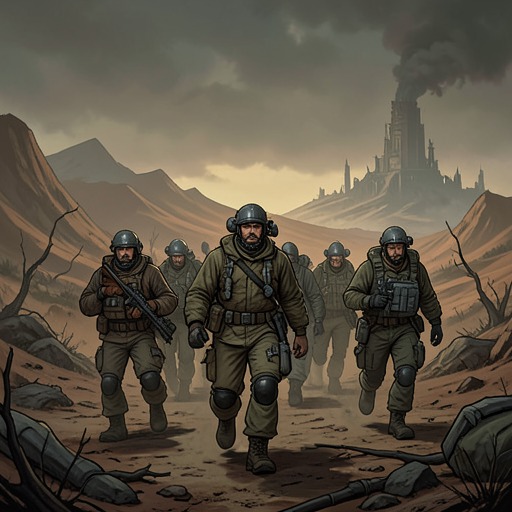
Human stalking in Harmont had been associated with the dirty, sullen figure who crawled inch by inch through the Zone, stubbornly gathering a nest egg. The work required physical entry into a dangerous environment, and the stalker’s livelihood depended on bringing out objects that could be passed on beyond the Zone. Its risks and its practical knowledge belonged to the person moving through that space, not to an observer at a console.
By the time the decline is discussed, the people who might carry on this work are already difficult to find. Five or six younger people have some experience, but they come and go, and there has lately been no one to fence the swag. The older stalkers are retired; the younger ones do not know how to do the work. The training of newcomers continues little by little, but it is a fragile response to a trade losing both experienced practitioners and the means to turn their finds into a livelihood.
Cybernetic Replacement
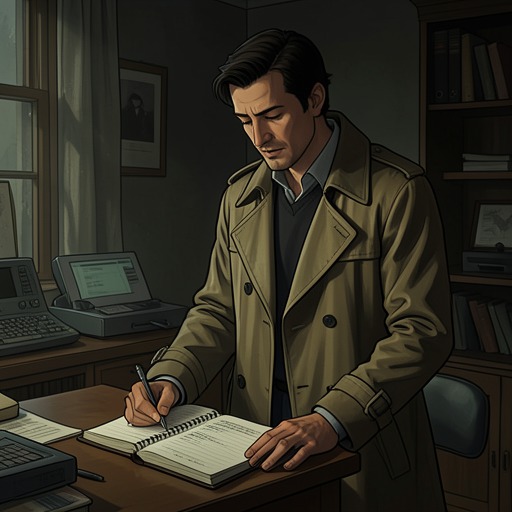
The new stalker is presented as a sharp contrast to the old one: a well-dressed engineer in a silk tie, seated about a mile from the Zone, with a cigarette and a pleasant drink beside him, monitoring screens. He is a salaried gentleman rather than a solitary trespasser building a nest egg. The transformation is not merely a change in clothing or workplace. Risk, labor, and observation have been redistributed: the human body no longer has to crawl through the Zone for the system to watch it.
This replacement initially seems so logical that alternatives do not come to mind. Yet the thought of other possibilities, including the Sunday school, interrupts that apparently complete picture. The sudden despair that follows—the sense that nothing can be done—shows that automation is not experienced as a neutral upgrade. The prospect is bound up with the fear that the old human role, and the capacity to respond to the change, may already be disappearing.
Declining Prestige and Uneven Transition
The trade’s loss is social as well as practical. Its prestige is slipping alongside the shortage of capable young stalkers, while established workers have retired. Stalking therefore does not vanish in a single decisive incident: it ebbs through an intergenerational break, interrupted training, and the growing availability of machines. The few young people with experience do not yet amount to a dependable successor generation.
The transition is not described as frictionless. A discussion of robot stalkers notes that the machines use too much energy, even as technological replacement is already taking over. The old occupation is weakened before the limitations of its replacement have been resolved. This gap makes the decline less like a clean handover than a period in which human expertise is fading while the new method remains costly.
Zone Artifacts and Systems of Control
Stalking exists within a larger system for controlling and circulating what comes out of the Visitation Zones. Valentine Pilman explains that his work as a Canadian consultant to the UN Commission on Problems of the Visitation concerns implementing decisions on internationalizing the Zones and ensuring that extraterrestrial marvels found there reach the International Institute. He distinguishes that institutional responsibility from the study of extraterrestrial cultures. Alongside it, he describes a steady leak of Zone materials into the hands of irresponsible people and organizations, whose consequences fall within the commission’s concern.
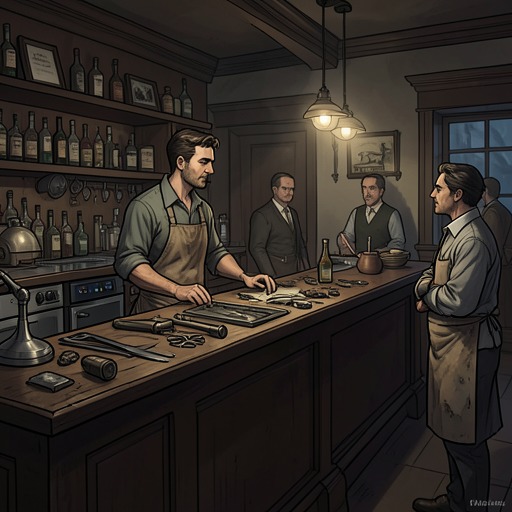
The black market is one point where the human trade’s material flows become visible. During an arrest, Captain Quarterblad empties a briefcase of swag onto a table, including two empties, nine batteries, and black sprays. Such objects have lives beyond the Zone: they are carried out, concealed, and handled through networks of exchange and enforcement. The absence of someone to fence the swag, then, is not incidental to the decline. It exposes how stalkers depend on intermediaries as well as on their own ability to enter the Zone and retrieve artifacts.
Knowledge Without Understanding
The novel sets technical competence against incomplete understanding. A discussion of the so-so's describes researchers who have learned how to use them and the conditions under which they multiply by a process resembling cell division, yet have still been unable to make one. The comparison is pointed: people may learn a procedure, monitor a device, or exploit an artifact without understanding the relations that make it work. Cybernetic observation can replace some of the old stalker’s physical labor, but it does not by itself restore the human experience being displaced or guarantee mastery of the Zone’s marvels.
Harmont’s changing stalker is therefore a figure of discontinuity. The old worker’s stubborn, bodily passage through the Zone gives way to remote screens and salaried oversight, while the human tradition survives only in scattered trainees and diminishing prestige. The decline reveals a world in which technology can reorganize who performs dangerous work without resolving the deeper problems of knowledge, access, and control surrounding the Zone.